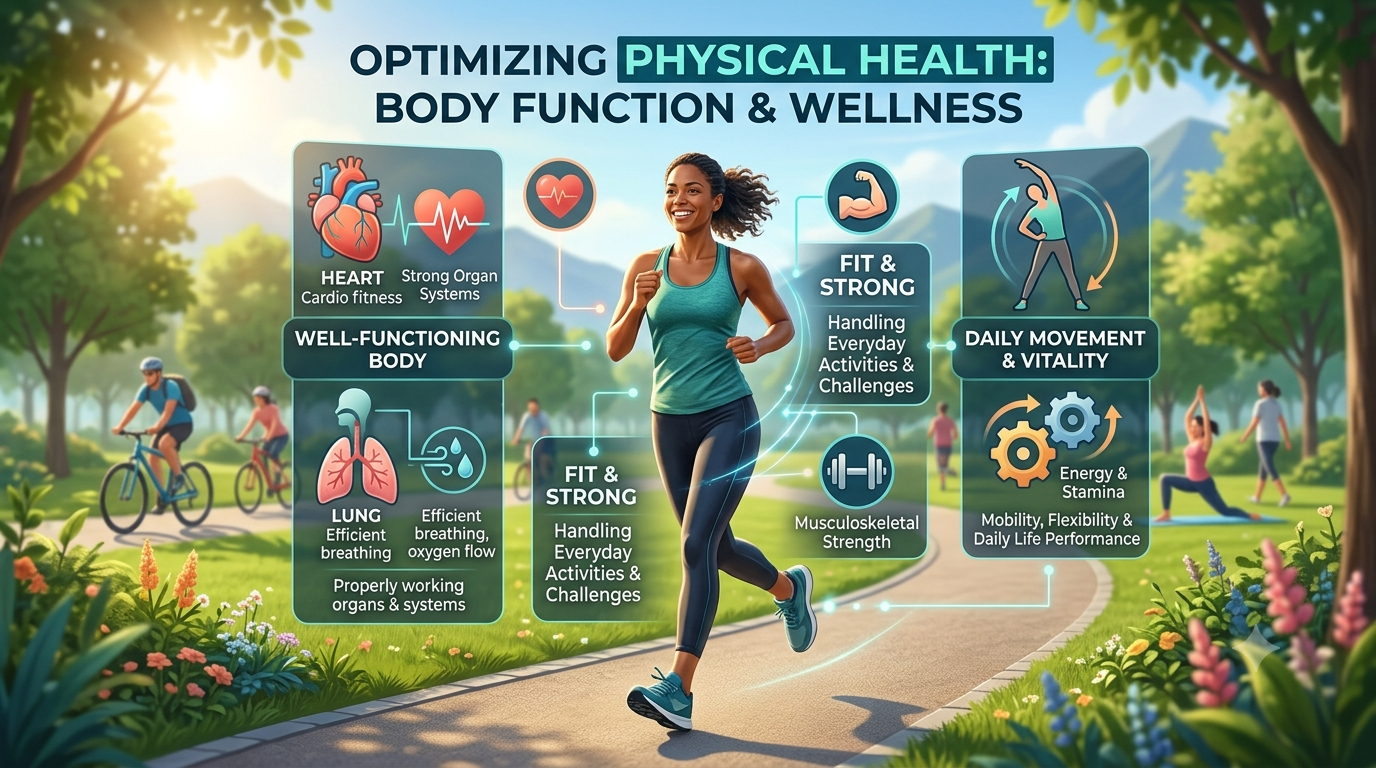
Physical health refers to how healthy and well-functioning your body is, both inside and out. It includes the health of your organs and body systems, as well as how well your body performs its everyday functions.
Good physical health means that your organs and body systems are working properly, while your body is also fit and strong enough to handle everyday activities. Simply put, this physical health definition shows that physical health is not only about being free from illness, but also about how well your body functions and helps you move, work, and go about your daily life.
What Are the Components of Physical Fitness?
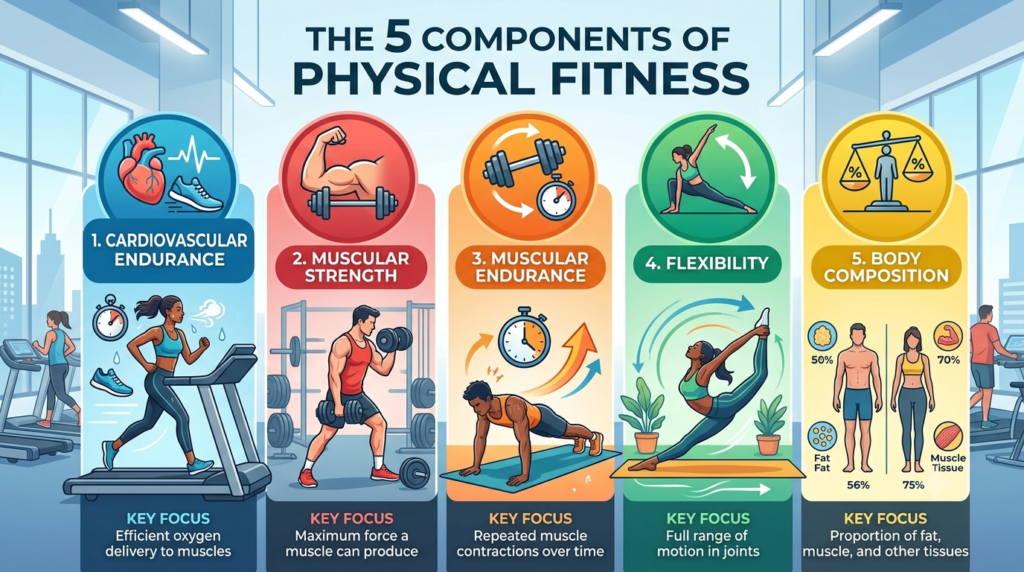
Physical fitness has five main components, each playing an important role in maintaining overall physical health and fitness.
1. Cardiovascular Endurance
Cardiovascular endurance refers to how well your heart, lungs, and blood vessels work together to supply oxygen to your muscles during physical activity. Good cardiovascular endurance allows you to stay active for longer without becoming excessively tired or out of breath.
Activities such as walking, jogging, cycling, swimming, and playing sports can help improve cardiovascular endurance because they keep the body moving continuously for an extended period. The amount of exercise you need can vary depending on your current fitness level, but regular activity can gradually improve your stamina.
You can also use the talk test to understand exercise intensity. If you can talk but cannot comfortably sing while exercising, the activity is generally considered moderate intensity. If speaking becomes difficult because you need to catch your breath, the intensity is likely higher. Starting at a comfortable level and gradually increasing the duration or intensity can help build endurance safely.
2. Muscular Strength
Muscular strength is the ability of your muscles to produce enough force to lift, push, pull, or move something. It plays an important role in everyday activities, from carrying groceries and climbing stairs to lifting objects and maintaining good posture.
Strength can differ from one muscle group to another. For example, someone may have strong leg muscles but comparatively less strength in their upper body. For balanced fitness, strength training should therefore involve the major muscle groups, including the legs, arms, back, shoulders, hips, and core.
Resistance exercises such as squats, push-ups, lunges, rows, and weight training can help build muscular strength. As your muscles become stronger, you can gradually increase the resistance, number of repetitions, or difficulty of an exercise. This gradual increase, often called progressive overload, encourages the muscles to adapt over time. Regular strength training can also support physical function and make everyday movements easier.
3. Muscular Endurance
Muscular endurance is different from muscular strength. While strength describes how much force a muscle can produce, muscular endurance refers to how long the muscles can continue working before they become fatigued.
Good muscular endurance can make activities such as walking, running, cycling, swimming, climbing stairs, or maintaining a certain body position easier to sustain. It is especially useful for activities that require repeated movements or prolonged muscle activity.
You can improve muscular endurance by performing exercises with lighter resistance and a higher number of repetitions. Bodyweight exercises, cycling, running, swimming, stair climbing, and activities such as yoga or Pilates can also help develop endurance. Exercises that require holding a position, such as a plank, are another example.
As with other areas of fitness, it is useful to begin at a level that feels manageable and gradually increase the duration or workload. Over time, consistent training can help your muscles work for longer periods before fatigue sets in.
4. Flexibility
Flexibility refers to how freely a joint or group of joints can move through its available range of motion. Good flexibility can make everyday movements easier, such as bending down, reaching for something on a high shelf, turning your body, or maintaining comfortable movement during physical activity.
Some activities, including gymnastics, dance, and martial arts, require a greater range of motion than others. Stretching and regular movement can help maintain or improve flexibility over time.
There are different ways to work on flexibility. Static stretching involves holding a muscle in a stretched position for a period of time, while dynamic stretching uses controlled movements to take the joints through their range of motion. Dynamic movements are often included during warm-ups because they prepare the body for activity.
Stretching should feel gentle rather than painful. Regular flexibility exercises performed several times a week can help you maintain comfortable movement and support your overall fitness routine.
5. Body Composition
Body composition describes the proportion of different components that make up your body, particularly fat mass and fat-free mass such as muscle, bones, organs, and body fluids. It is one of the components used to understand physical fitness and overall body health.
Having some body fat is essential because the body needs it for functions such as energy storage, hormone production, and protecting organs. However, excessive body fat, particularly around the abdominal area, has been associated with a higher risk of several chronic health conditions. On the other hand, maintaining healthy levels of muscle and bone mass can support physical function and overall health.
Body composition can be estimated in several ways, including waist measurements, waist-to-hip ratio, bioelectrical impedance scales, and more advanced methods such as DEXA scans. However, body composition is only one part of fitness. Cardiovascular endurance, muscular strength, muscular endurance, and flexibility are also important when looking at overall physical fitness.
Physical Health and Wellness
Many people think physical health and wellness are the same thing, but they are not. Although the two are closely connected, they describe different aspects of your overall well-being.
Physical health mainly refers to the condition and functioning of your body. It includes being free from illness or injury, having healthy body systems, and being physically capable of carrying out everyday activities. Factors such as nutrition, exercise, sleep, hygiene, and regular health checkups can all play a role in maintaining physical health.
Wellness, on the other hand, is a broader and more active concept. It refers to the ongoing choices and habits you make to support your overall well-being. Wellness can include physical health, but it can also involve mental and emotional well-being, social relationships, stress management, and other areas of daily life.
For example, a person may have no major illness and therefore be in good physical health, but still have poor lifestyle habits or struggle to maintain balance in other areas of life. Similarly, someone who actively focuses on exercise, healthy eating, sleep, relationships, and managing stress is taking steps toward overall wellness.
In simple terms, physical health describes the condition of your body, while wellness is the ongoing process of making choices that support a healthier and more balanced life.